
Last updated November 14, 2026
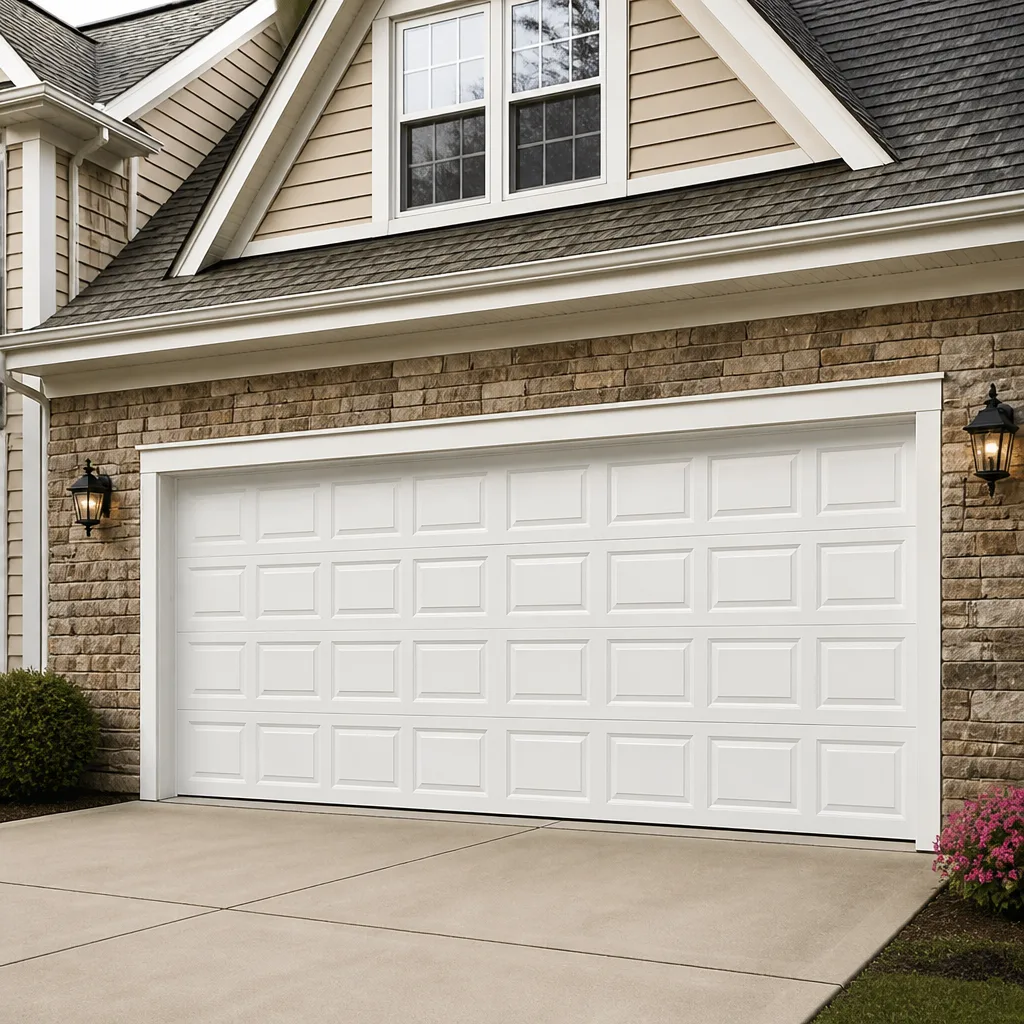 Raised-panel steel
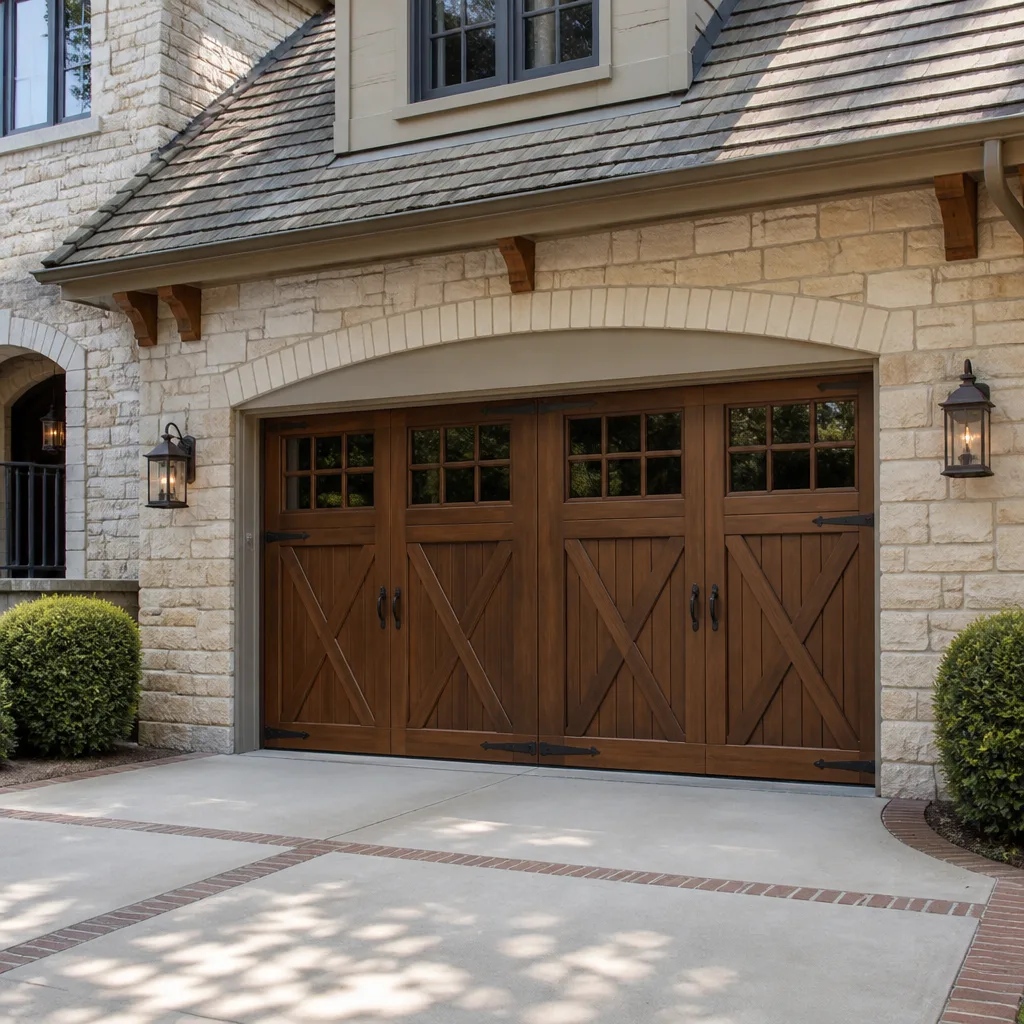 Carriage house
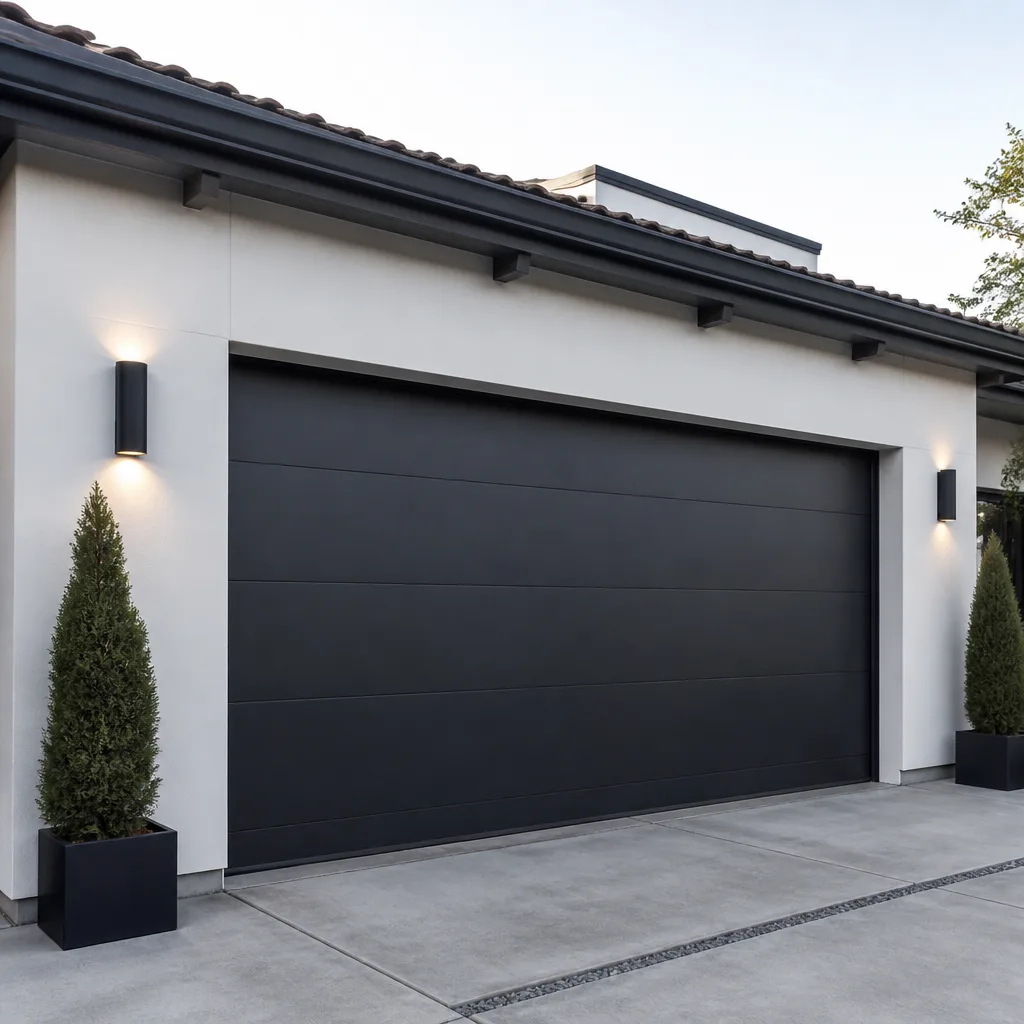 Modern flush
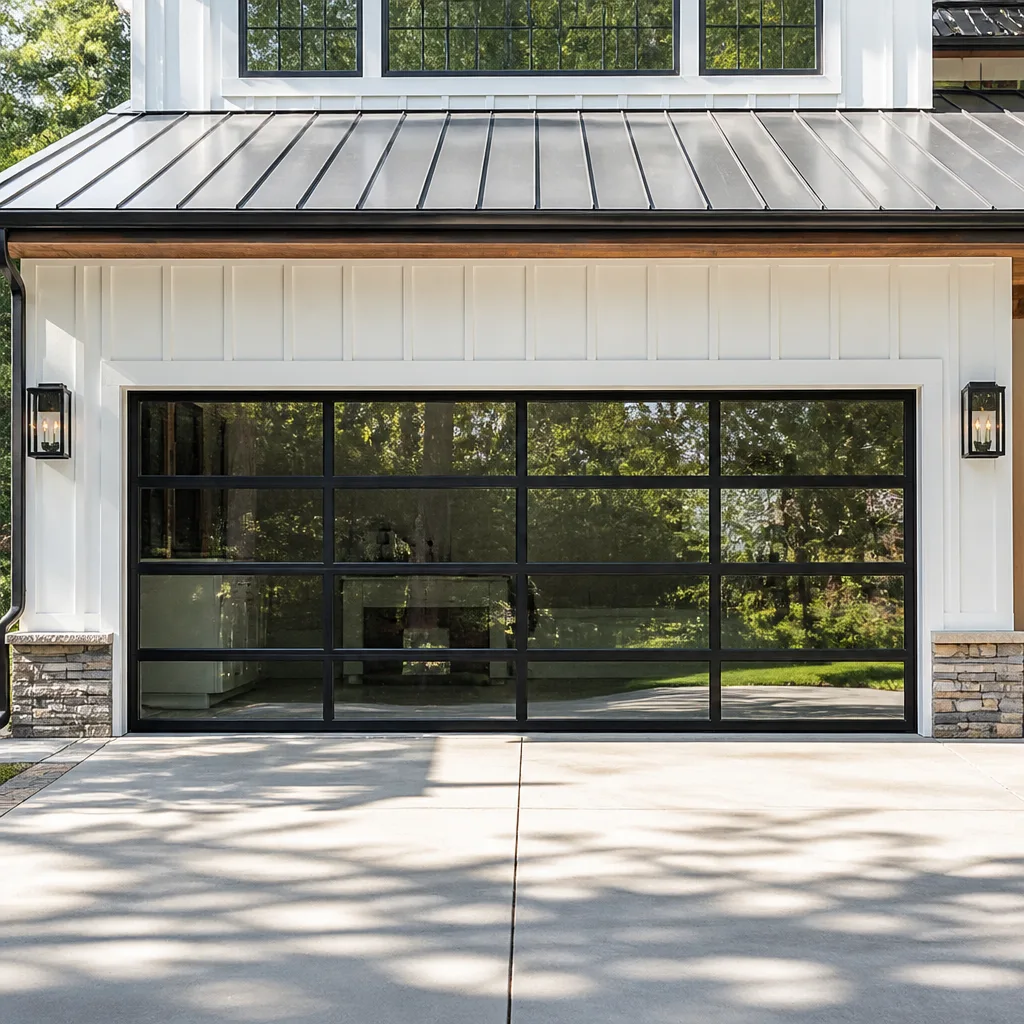 Full-view glass
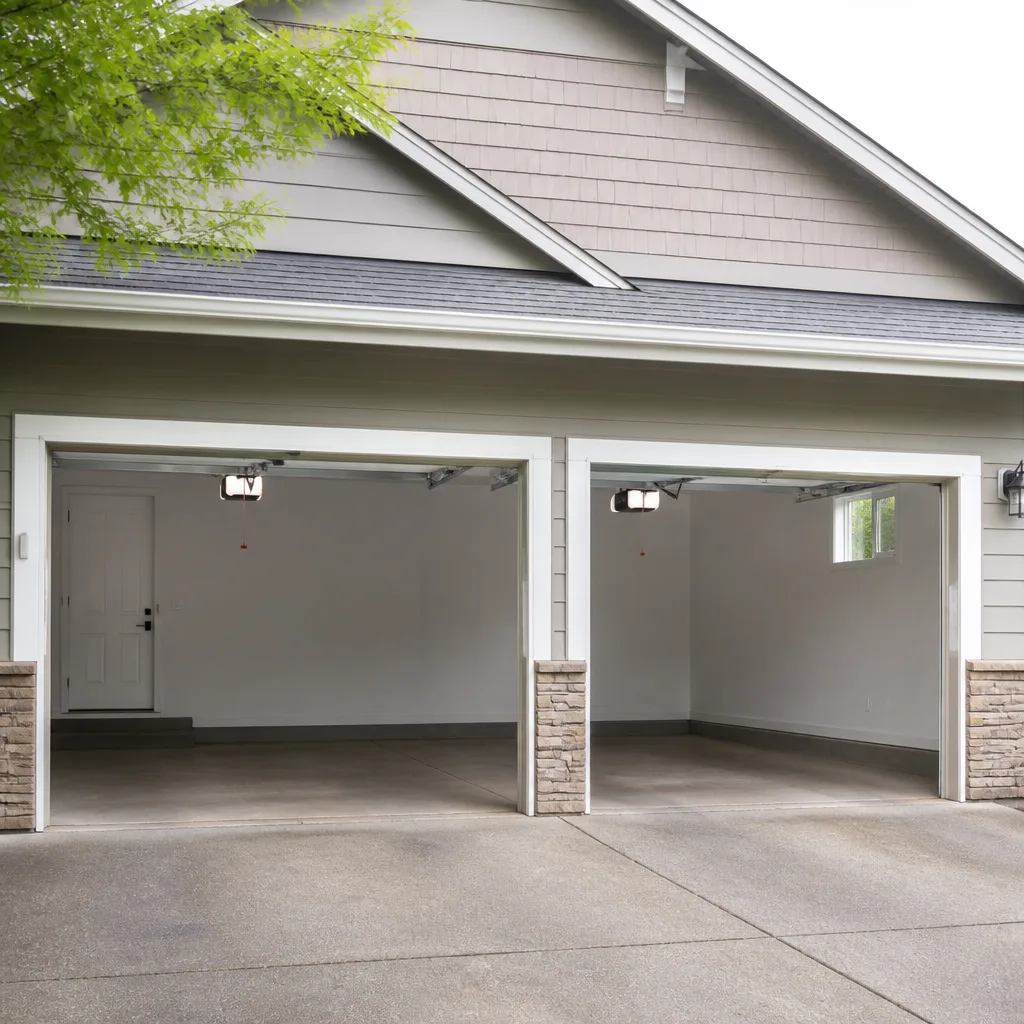 LiftMaster openers
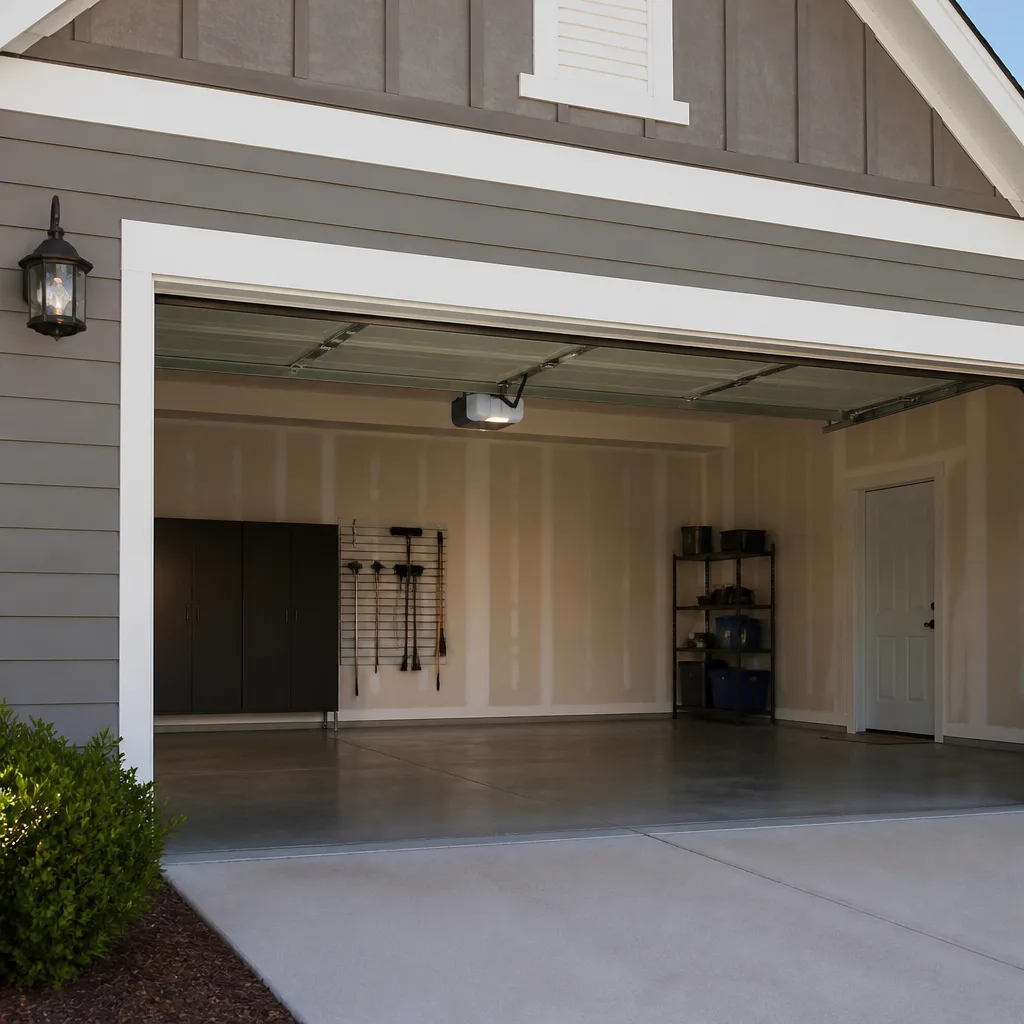 Chamberlain openers
Full 25-point door and opener safety check with every visit - springs, cables, rollers, tracks, and your LiftMaster or Chamberlain opener included
You get a price before we start. It does not change when the truck arrives.
Get your free estimateChoosing the Right Garage Door Brand: A Buyer’s Guide for Gainesville
Most homeowners in Gainesville start their garage door search the same way: they pick a look they like, then check the price. That order is backwards. The brand you choose decides what happens two or three years from now, when a hinge wears out, an opener board fails, or a panel needs replacing after a storm. A national name with no distributor nearby means waiting 10 to 14 days for a part that should be on a shelf. Florida’s heat and humidity also wear doors faster than the national averages a manufacturer prints on the box. This guide shows you the two criteria that matter first, how to read certification labels, how to compare warranties honestly, and where spending more actually pays you back.
Quick Answer
The right garage door brand in Gainesville is the one whose wind-rated product line is certified for Florida and whose parts you can actually get locally within a day or two. Start there, then compare steel gauge, insulation, finish, and warranty terms. A familiar logo means nothing if the panel or spring you need is sitting in a warehouse out of state.
Styles & brands we work with
- Raised-panel steel
- Carriage house
- Modern flush
- Full-view glass
- LiftMaster openers
- Chamberlain openers
Table of Contents
- Why Florida wind certification comes first
- What the certification labels on a spec sheet actually mean
- Local parts availability: the reality check
- Comparing manufacturer warranties apples to apples
- Builder-grade vs. mid-range: which upgrades are worth it here
- How door brand affects your opener and smart home options
- A step-by-step way to choose your brand
- Common mistakes to avoid
Why Florida Wind Certification Comes First
If you’re replacing a door and skipping the certification question, you’re choosing a brand by the wrong rule. Florida’s building code treats the garage door as part of your home’s wind-load envelope, and county building departments generally require a rated and labeled door for new installations and replacements. That means the brand has to offer a product line built, tested, and labeled for wind pressure, not a door rated for a calmer climate and sold here anyway.
Several of the manufacturers we work with publish Florida-compliant lines. Clopay and Amarr both build wind-rated product families, and Amarr in particular is widely specified in this part of the state. Wayne Dalton and CHI also carry rated options, and Doorlink offers rated product at a lower price point. What matters more than the logo is whether the exact model number you’re buying appears on a certification listing for the design pressure your home needs.
Here’s the practical test. Ask for the spec sheet before you agree to anything, and look for three things:
- A design pressure rating, expressed as a positive and negative number, matched to your home’s requirements
- A certification label or listing number you can point to on the paperwork, not just in a brochure
- Reinforcement details for the panels, hinges, and track, since a rated door without rated hardware isn’t rated
If a salesperson can’t produce that sheet, that’s your answer about the brand. Your city or county building department is the authority on what your specific address requires, and it’s worth a phone call before you order. Around Gainesville, homes sit in more than one wind zone depending on where you are, so the requirement isn’t identical from one neighborhood to the next. A door that’s certified but installed without the matching hardware is the most common failure we see on newly built homes in north Gainesville and off Archer Road.
What the Certification Labels on a Spec Sheet Actually Mean
A certification label is only useful if you can decode it. Manufacturers print a lot of shorthand on a spec sheet, and the words that sell doors are not always the words that prove performance.
Design pressure ratings come in pairs, positive and negative, because wind pushes a door inward and pulls it outward as it moves across a house. A higher number means a stronger door, and the track, hinges, and struts have to be rated to match. Look for the rating to be stated for the same size door you’re buying, since a rating on a narrow door doesn’t transfer to a wide one.
You’ll also see reference to impact testing and to product listings from recognized certification bodies. A listed product means a third party has reviewed the test data. If the spec sheet only says “wind resistant” or “storm ready” with no number attached, treat that as marketing and keep asking questions.
- Get the exact model number in writing, not just the series name.
- Ask for the certification sheet for that model and size.
- Confirm the reinforcement package the rating depends on is included in the quoted price.
- Confirm your installer will leave the label on the door and provide the paperwork your building department wants.
This is where brand-agnostic expertise earns its keep. Because we work with Clopay, Amarr, Wayne Dalton, CHI, and Doorlink lines, we can read these sheets side by side and tell you which product meets your requirement without overselling you a heavier door than you need. If you want to understand how installation requirements vary by address, our Gainesville service page is a good starting point.
Local Parts Availability: The Reality Check Nobody Runs
Here’s the scenario that turns a well-known brand into a frustrating one. A hinge snaps, or a bottom seal tears, or the opener’s logic board fails. If the brand has a distributor in the Gainesville and North Central Florida market, that part is often available same day or next day. If it doesn’t, you’re on a 10 to 14 day wait for something that costs a few dollars to make.
That gap matters more here than it does up north. Florida heat softens and hardens seals, finishes, and plastic components on a faster cycle. Humidity works on steel finishes, springs, and hardware. In our experience, a door in this climate asks for parts more often than the national wear assumptions suggest, which means the wait happens sooner and more often.
The parts reality also affects your opener. Opener brands and door brands aren’t interchangeable systems. LiftMaster, Chamberlain, Genie, Craftsman, and Raynor each have their own parts chain and their own compatibility quirks with particular doors and smart home setups. When a door and opener come from the same single-source specialist, matching a replacement part to what’s in your garage takes a phone call, not a guessing game.
- Ask who stocks parts for the brand in this region, and how long a typical special order takes.
- Ask whether the brand requires proprietary hardware that limits generic replacements.
- Ask about the bottom seal, hinges, rollers, and springs specifically, since those are the parts you’ll replace first.
A brand with a strong local dealer network makes garage door repair a same-week event instead of a two-week inconvenience. That’s the test a brochure can’t pass.
Comparing Manufacturer Warranties Apples to Apples
“Limited lifetime” sounds like it covers everything forever. It doesn’t, and the gaps are exactly where a humid climate puts pressure on a door.
Manufacturer warranties are split into sections, and almost every one of them covers different parts for different lengths of time. A typical structure looks like this:
| Warranty section | What it usually covers | Where the exclusions bite |
|---|---|---|
| Panels and sections | Structural failure, delamination, some finish defects | Finish coverage is often shorter than structural coverage, and finish is what fails first in humidity |
| Hardware and hinges | Defects in manufacturing | Wear and tear, corrosion, and rust are commonly excluded |
| Springs and torsion system | Cycle count rather than years | Cycle limits are reached faster when a door is used heavily |
| Labor and installation | Rarely included by the manufacturer | Labor is usually the installer’s responsibility, not the brand’s |
To compare two brands fairly, pull both warranty documents and line up the same four columns: what’s covered, for how long, what voids it, and who pays the labor. The fourth column is the one homeowners skip. A brand that replaces a panel for free but leaves you paying the labor to install it hasn’t saved you what you thought.
Pay close attention to exclusions around corrosion, moisture, and finish. A manufacturer writing a warranty for a dry climate may not think of Gainesville humidity as a covered condition, and the fine print will say so. A brand that markets specifically to Florida will usually write its exclusions with that in mind. Neither is wrong, but you want to know which one you’re buying before the door is on the wall.
One honest note: the labor side of the warranty is where we come in. Our work stands behind every repair, and we’ll tell you plainly which portion of a failure is the brand’s responsibility and which is ours. If you’re comparing an opener’s terms as well as the door’s, garage door opener repair coverage usually works differently again.
Builder-Grade vs. Mid-Range: Which Upgrades Are Worth It in Gainesville
Inside any single brand, price spread comes down to three things: steel gauge, insulation, and finish. Homeowners tend to spend on the wrong one.
Steel gauge is thickness, and lower numbers mean thicker steel. Builder-grade doors use thinner steel and come with a thinner finish, which holds up fine until humidity and sun start working on both. Mid-range doors thicken the steel and layer a better finish process, deeper paint, sometimes a galvanized or textured surface that handles moisture better. In this climate, that finish difference is the upgrade you’ll notice.
Insulation is where buyers overspend. An insulated door helps if your garage is attached and above it sits living space, or if you use the garage as a workshop or gym. If your garage is a detached shed for the car and the lawnmower, a high insulation value is money you won’t feel. Insulation also comes in layers, and a polystyrene core behind a steel skin behaves differently from a polyurethane core, but for most detached garages here either is more than enough.
- Spend first on steel gauge and finish quality, because those defend against the local climate.
- Add insulation only if the garage shares a wall or ceiling with conditioned space, or if you spend real time in there.
- Ask about hardware quality, since sturdier hinges and rollers reduce the wear that leads to future repairs.
- Compare the same specifications across two brands before deciding which one’s mid-range is the better buy.
If you’re building or renovating and want to compare brands at the same specification level, call us and we’ll walk the models with you. A Holloway Garage Door Repair estimate on a new door is free.
How Door Brand Affects Your Opener and Smart Home Options
People choose a door first and think about the opener second. The order should be reversed, or at least planned together, because the door’s weight, balance, and panel construction determine what kind of opener will work well and how much it will have to work.
Opener brands we handle, including LiftMaster, Chamberlain, Genie, Craftsman, and Raynor, each bring a different feature set. Some lean toward smart home integration and app control, some toward quiet belt or screw drive operation, some toward heavy lifting for a solid insulated door. Compatibility matters at the mounting and safety-sensor level as well as in the electronics. A change in door type can mean a new opener mounting arrangement, and a change in opener can mean a new set of brackets.
The single-source advantage is straightforward here. When one company handles the door and the opener, matching them is part of the same job instead of a handoff between two contractors who never speak. Later, when the door needs a hinge or the opener needs a logic board, you’re calling one number that already knows what’s installed.
- Plan the opener as part of the door decision, not as an add-on after the fact.
- If you want smart home control, choose the opener brand with the integration you’ll actually use.
- If you want quiet operation, pair a belt drive with an insulated door and use opener-specific installation.
- Ask about parts sourcing for the opener brand as well as the door brand, since you’ll need both eventually.
A Step-by-Step Way to Choose Your Brand
Work through these in order and you’ll end up with a door that’s right for this market rather than one that just looked good in a showroom.
- Confirm your wind requirement. Call your city or county building department with your address and ask what design pressure your replacement needs. Write the number down.
- Shortlist brands with a certified product at that rating. Clopay, Amarr, Wayne Dalton, CHI, and Doorlink all have compliant lines, but the specific model has to match your requirement.
- Check local parts access for each shortlisted brand. Ask your installer who stocks parts in the region and how long a special order takes.
- Compare the same specification across brands. Line up steel gauge, insulation, finish, and hardware like for like, not base model against premium.
- Read the warranties side by side. Use the four columns: what’s covered, for how long, what voids it, who pays labor.
- Decide the opener alongside the door. Match drive type and smart features to how you actually use the garage.
- Get a written estimate from a specialist who works across brands. A company that only sells one brand can’t tell you honestly whether it’s the right one for your home.
That last step is where we fit. We stock, install, and repair across the eight brands you’re most likely to find in a Gainesville garage, so the recommendation follows your house and your budget rather than a sales quota. Garage doors are all we do, and that focus is why we can read a spec sheet and a warranty with the same eye. If you want the honest version of the comparison, we’ll give it to you.
Common Mistakes to Avoid
- Choosing on looks and price alone. A door that fails a wind inspection has to be replaced or reinforced, and that cost lands after you’ve already paid for the door.
- Assuming a famous logo means local support. A brand without a regional distributor can leave you waiting 10 to 14 days for a part on a door you use every day.
- Buying the highest insulation value without a reason. On a detached garage in this climate, that’s money you’ll never recover in comfort.
- Reading “limited lifetime” as “everything forever.” Finish coverage is usually shorter than structural coverage, and corrosion exclusions often matter most in a humid climate.
- Skipping the reinforcement hardware on a rated door. A certified panel installed without the matching hardware isn’t a certified installation.
- Choosing the opener last. Compatibility affects mounting, sensors, and the feature set you’ll live with for years.
- Using a generalist for a specialist job. A company that splits its time across a dozen trades hasn’t spent the hours on torsion systems, track alignment, and opener electronics that this work asks for.
See the difference
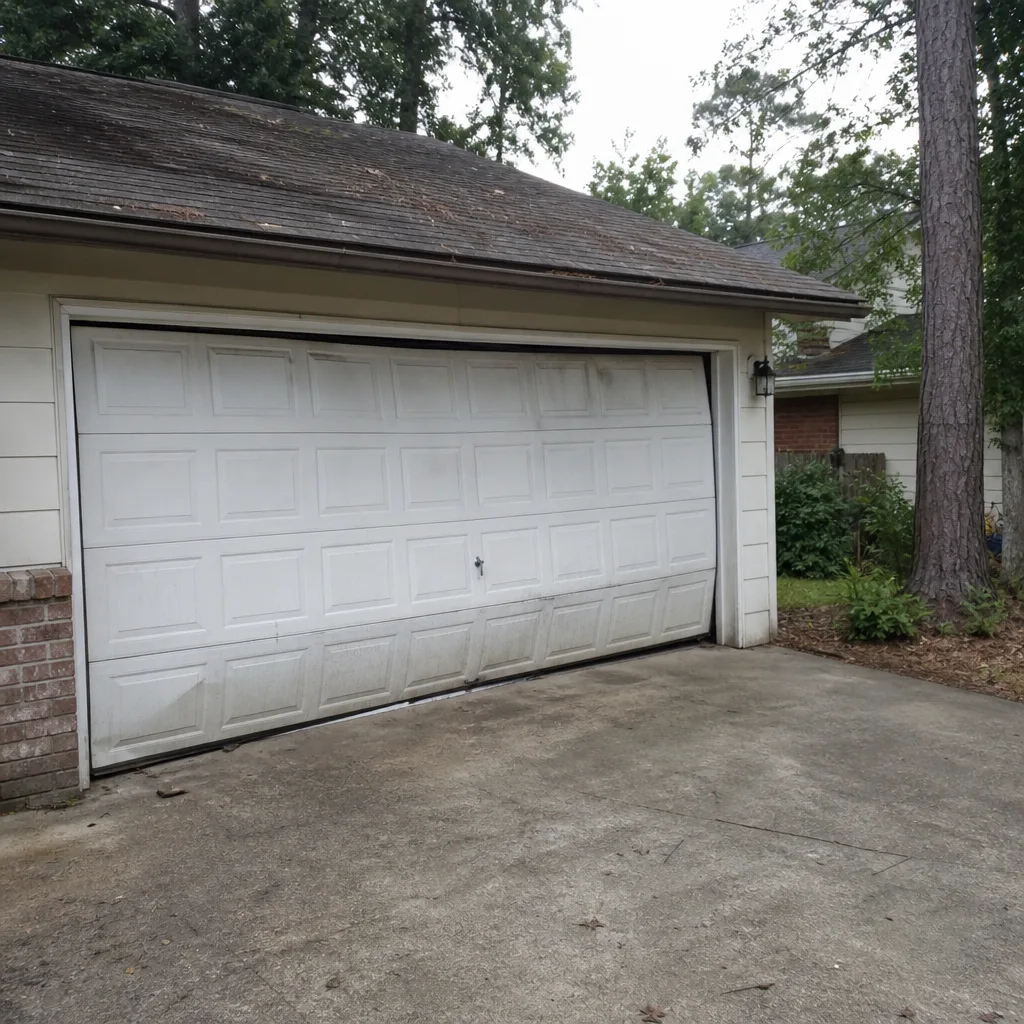 Before
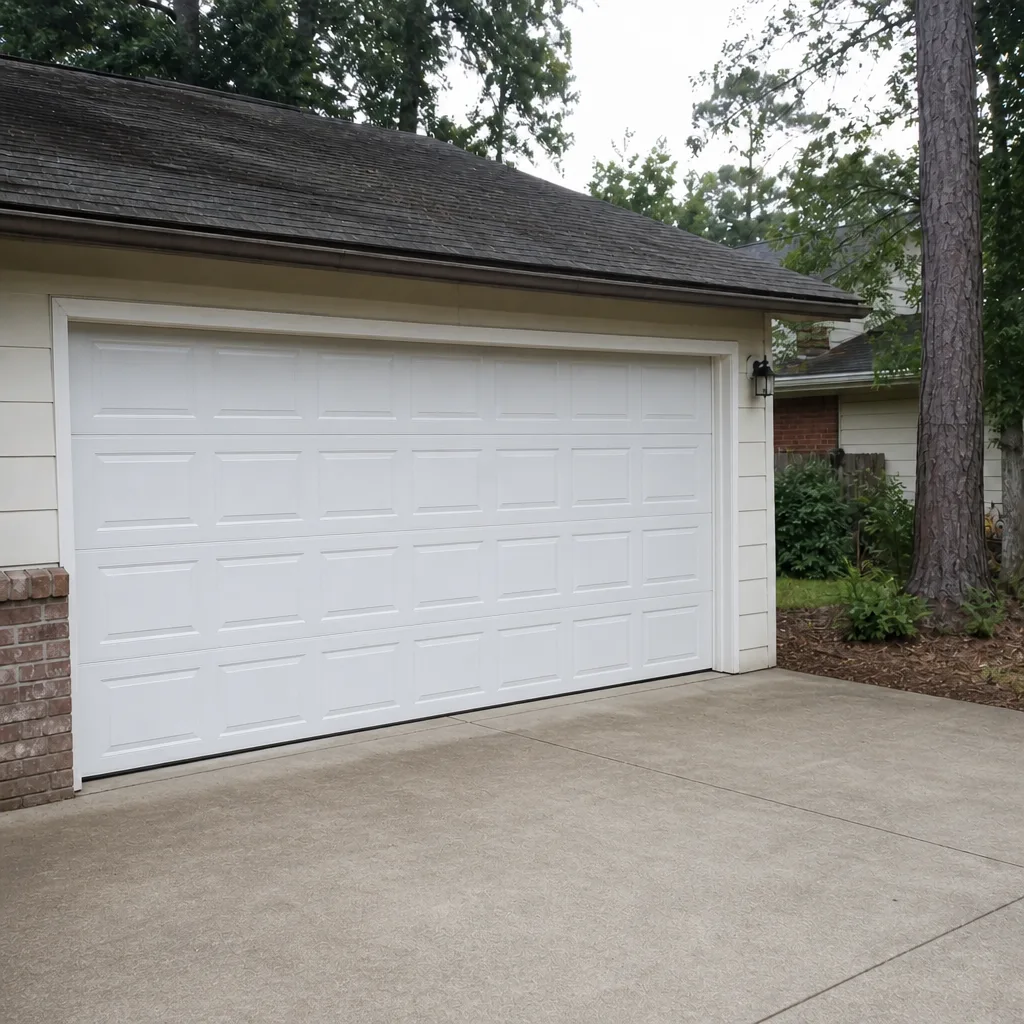 After
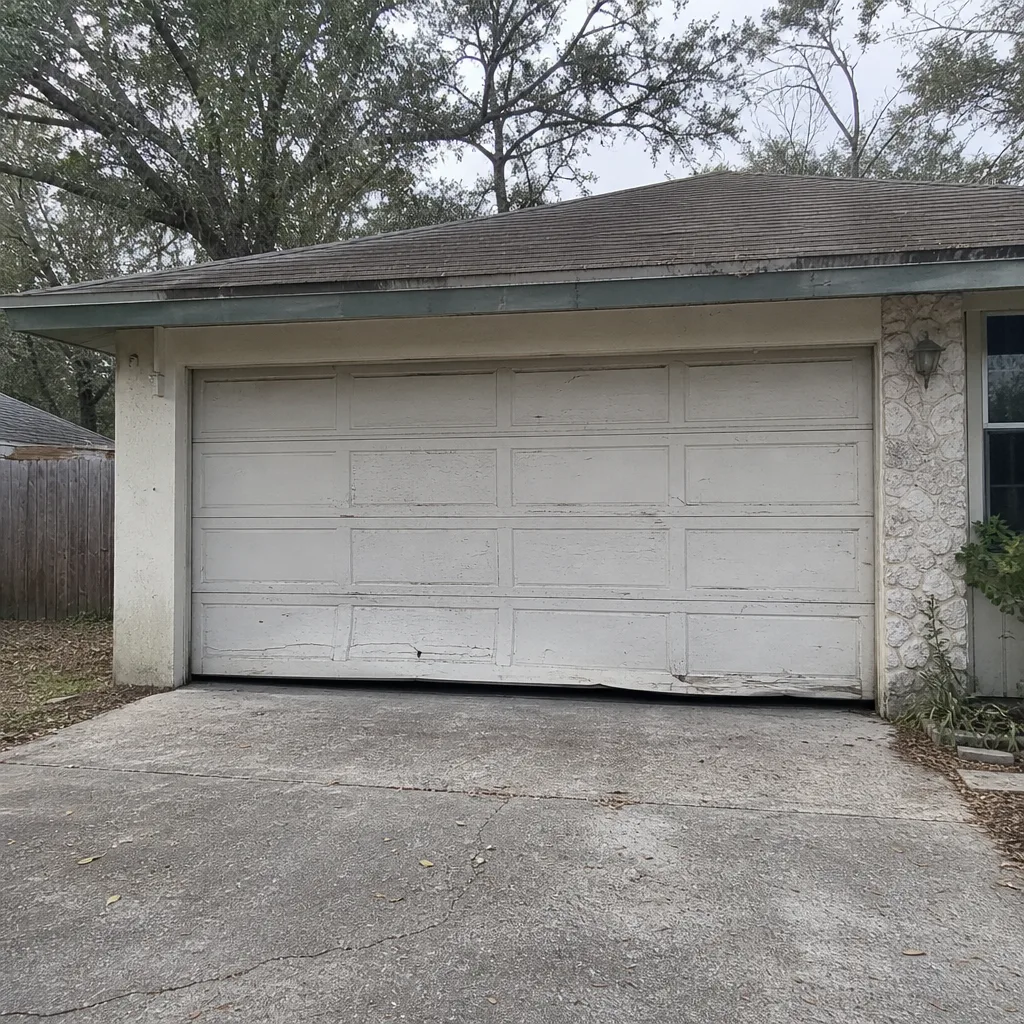 Before
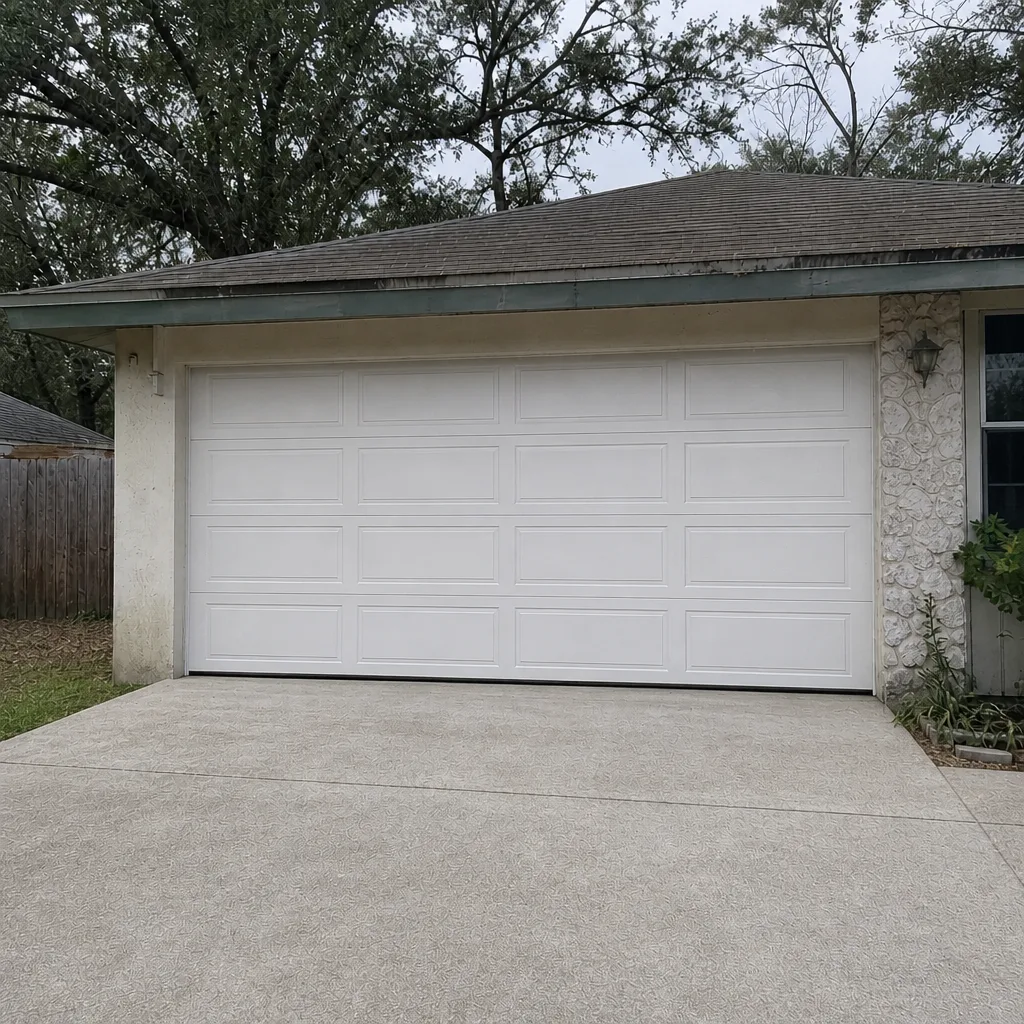 After
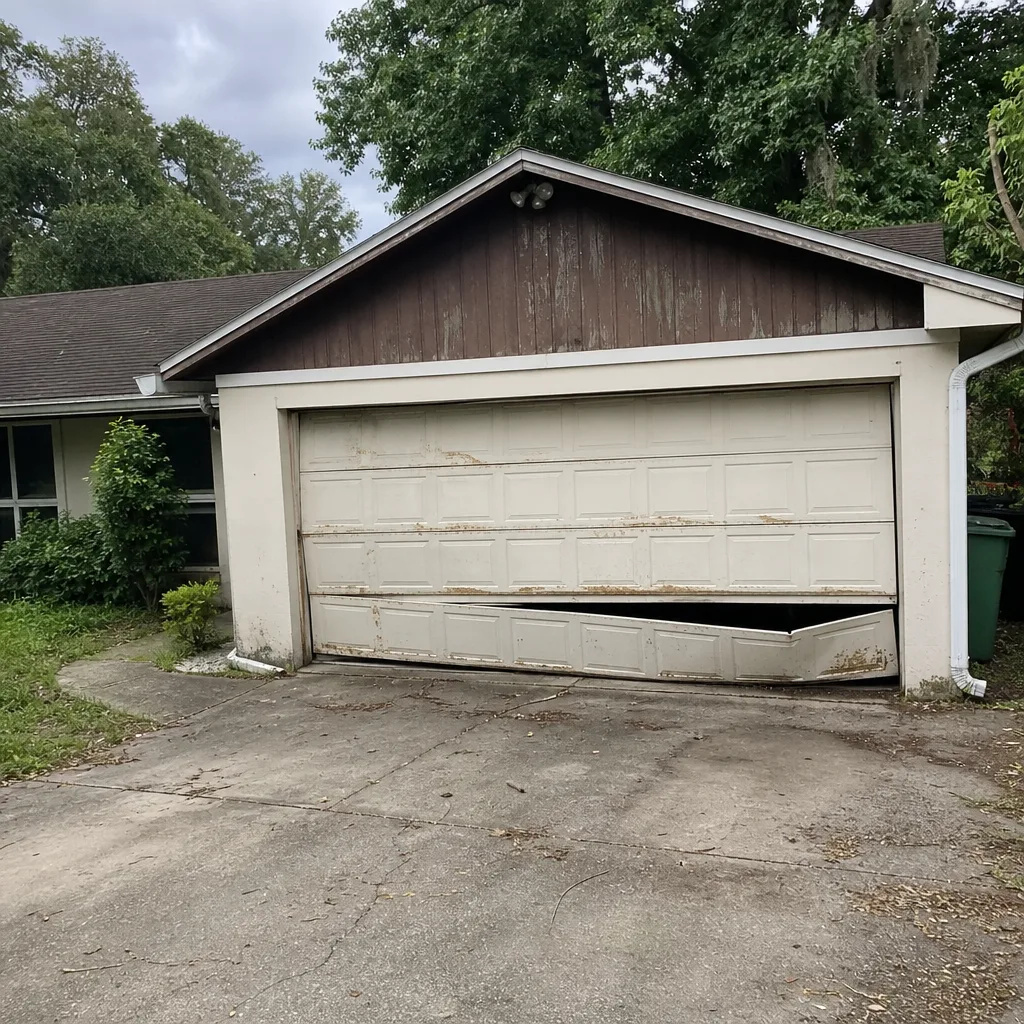 Before
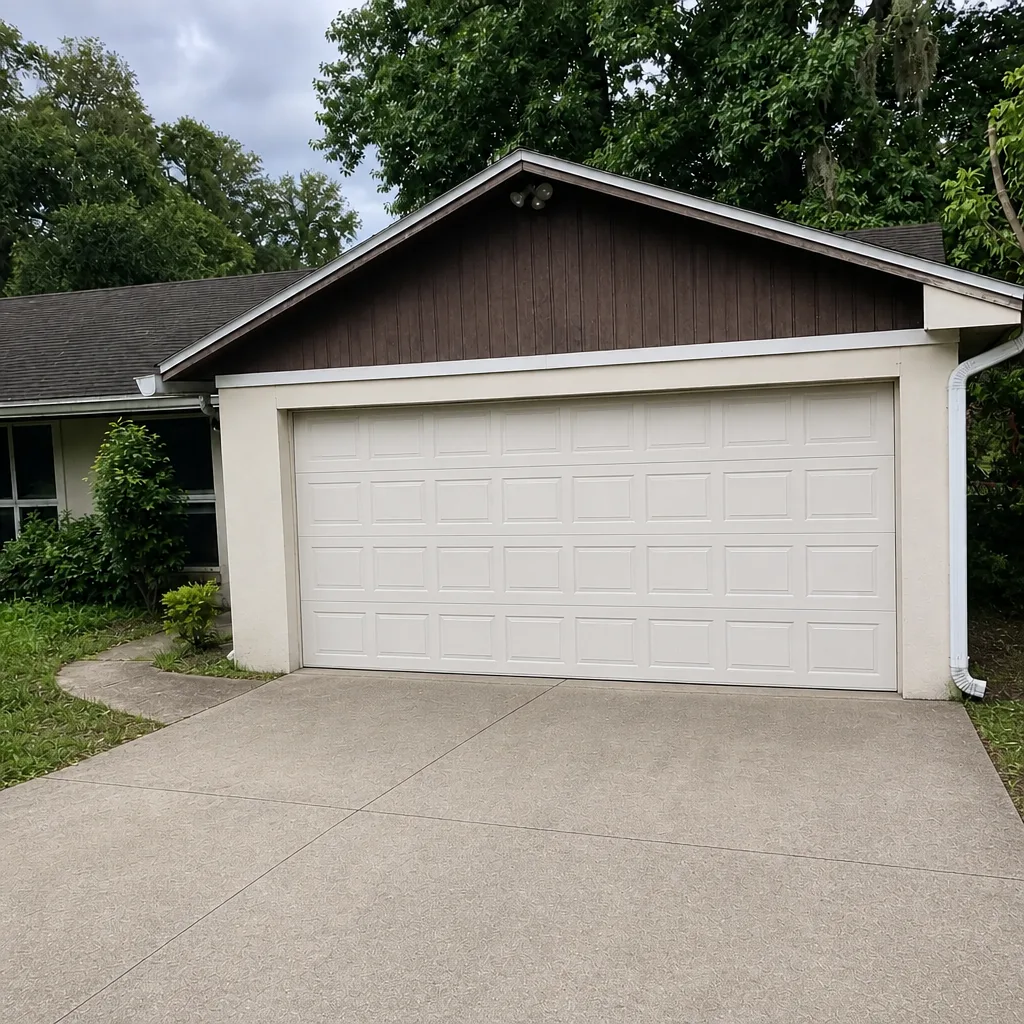 After
When to Call a Professional
Some decisions are safe to make on your own. Brand selection for a wind-rated door isn’t one of them, at least not without the spec sheets in front of you. Call a professional when your current door has failed a wind inspection, when you’re replacing a door and don’t know your required design pressure, when a panel or spring has failed and you need to know whether the part is available locally, or when your opener and door came from different eras and no longer work smoothly together. Springs and cables under tension are dangerous and belong to trained technicians, not a weekend project. Holloway Garage Door Repair offers free estimates in Gainesville and works across the brands you already have. Call (866) 389-5046. We answer 24/7. Fast dispatch from 7am to 7pm, Sunday through Friday.
Frequently Asked Questions
There’s no single best brand, but the right one for your home is certified for Florida wind requirements and has parts stocked locally in the Gainesville and North Central Florida market. Clopay, Amarr, Wayne Dalton, CHI, and Doorlink all offer compliant product lines, and the specific model matters more than the brand name. Call (866) 389-5046 for an exact quote across the brands we carry; estimates are free.
In most cases, yes, for a new or replacement door, because Florida’s building code treats the garage door as part of the home’s wind-load envelope. The specific requirement depends on your address and wind zone, so confirm with your city or county building department before ordering. We can match a certified product to whatever rating they give you; call (866) 389-5046 to get started.
It depends entirely on whether the brand has a distributor in this region. Brands with local parts access typically see same-day or next-day availability, while a brand with no local distributor can mean a 10 to 14 day wait. That gap is why we put parts availability right beside certification when we help a customer choose. Call (866) 389-5046 for a free estimate.
It can, mostly through mounting, weight, and balance rather than through brand compatibility itself. A heavier insulated door may need a stronger drive, and a change in door type can require new brackets and safety sensor placement. Planning the opener alongside the door avoids surprises. Call (866) 389-5046 to talk through the pairing.
Often yes, but only on the right upgrades. Spending on thicker steel and a better finish pays you back in the local heat and humidity. Spending on maximum insulation usually doesn’t, unless your garage is attached or you spend real time in it. The written estimate sets the final price, so call (866) 389-5046 for a free quote.
Usually structural failure of the panels, which is the section least likely to fail, while finish, hardware, and springs come with shorter terms or cycle limits. Corrosion and wear are commonly excluded, and that’s exactly where a humid climate finds weaknesses. Read the four columns, what’s covered, how long, what voids it, and who pays labor.
The Bottom Line
Choose a garage door brand in Gainesville with two questions, not twenty: is this specific model certified for Florida wind requirements, and can I get parts for it here within a day or two? Once those are answered, compare steel gauge, finish quality, insulation, and warranty terms at the same specification level. Spend on steel and finish before insulation. Plan your opener alongside the door. And use a company that works across brands, because the honest answer about which brand is right for your home only comes from someone who isn’t tied to one. That’s what we do, and we’ve done it in Gainesville since 2017.
Your door is one of the biggest moving parts on your house. Get the brand right and the next decade is quiet. Get it wrong and every repair comes with a shipping delay. Either way, we’re glad to look at what you have and tell you the truth about it. Call (866) 389-5046 for a free estimate. We answer 24/7. Fast dispatch from 7am to 7pm, Sunday through Friday.
Written by the team at Holloway Garage Door Repair, serving Gainesville since 2017.