
Last updated November 14, 2026
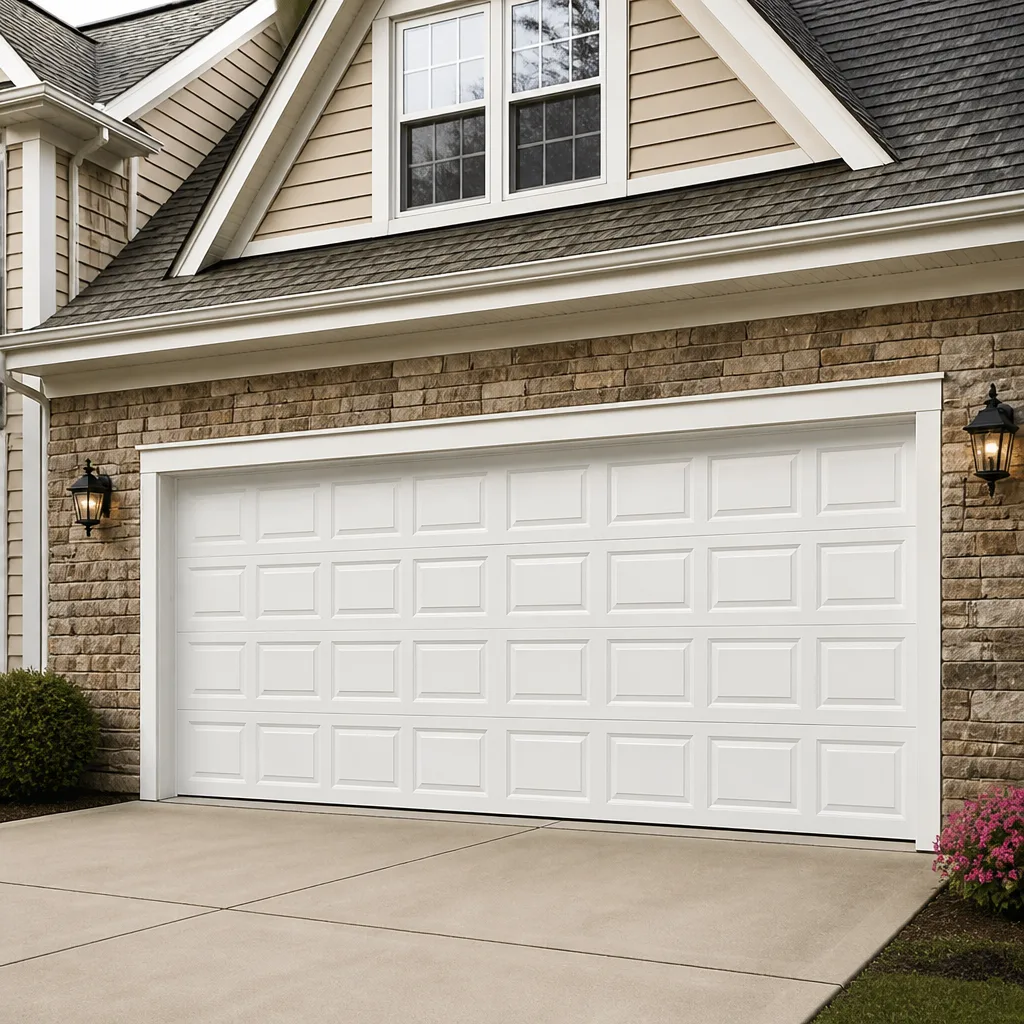 Raised-panel steel
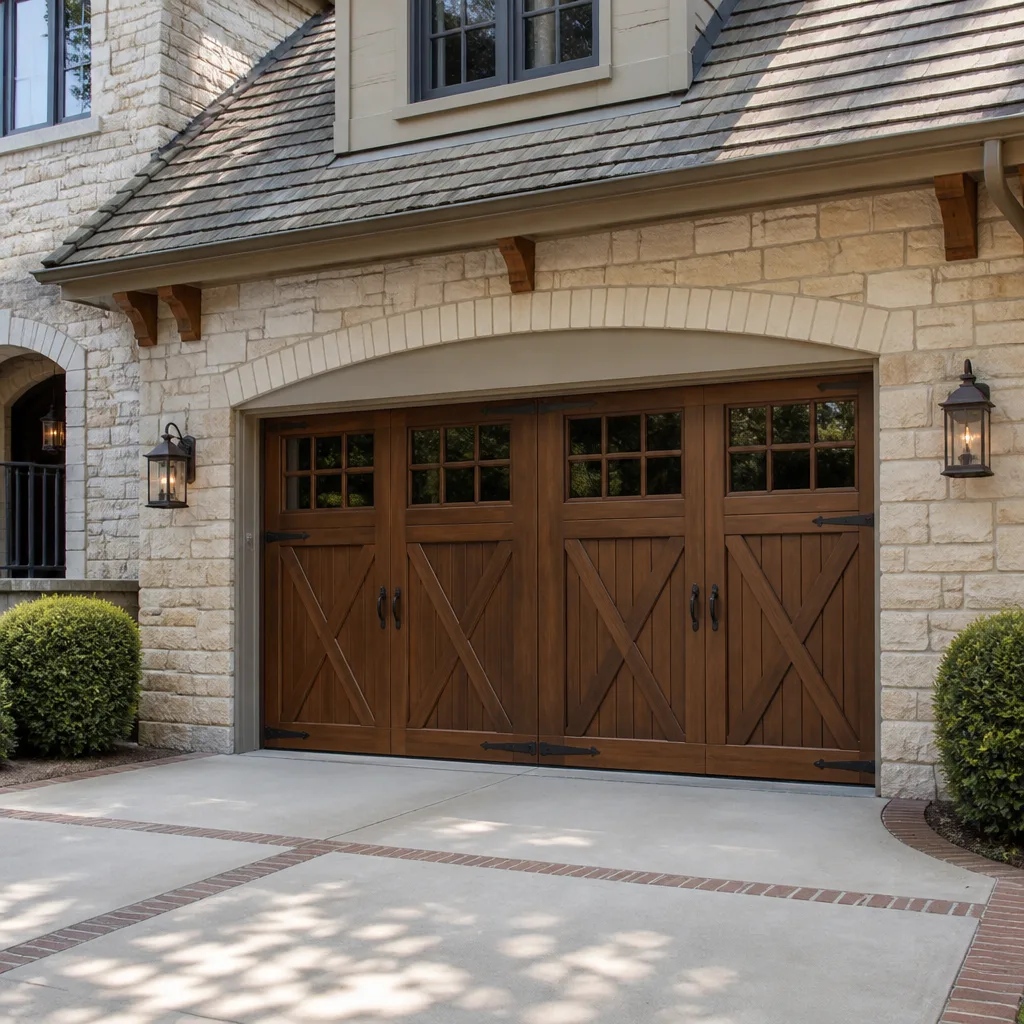 Carriage house
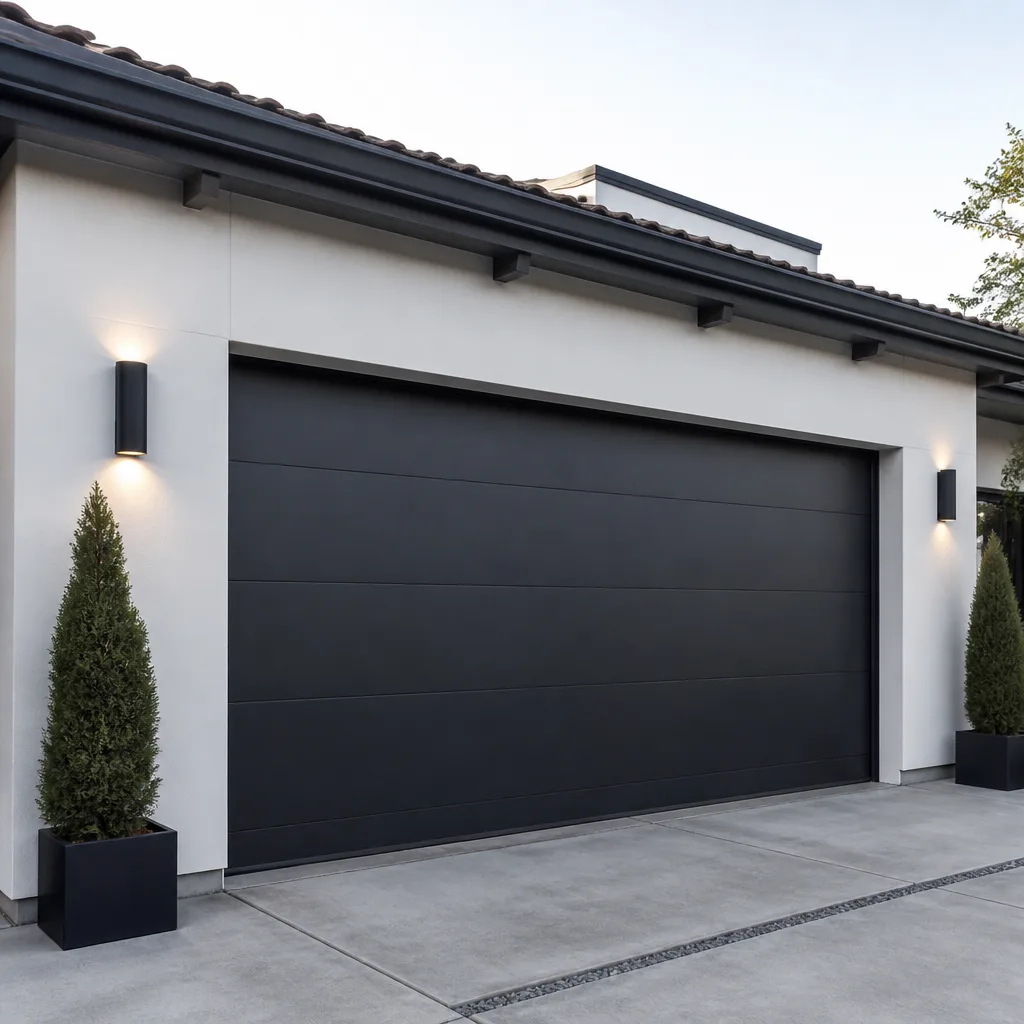 Modern flush
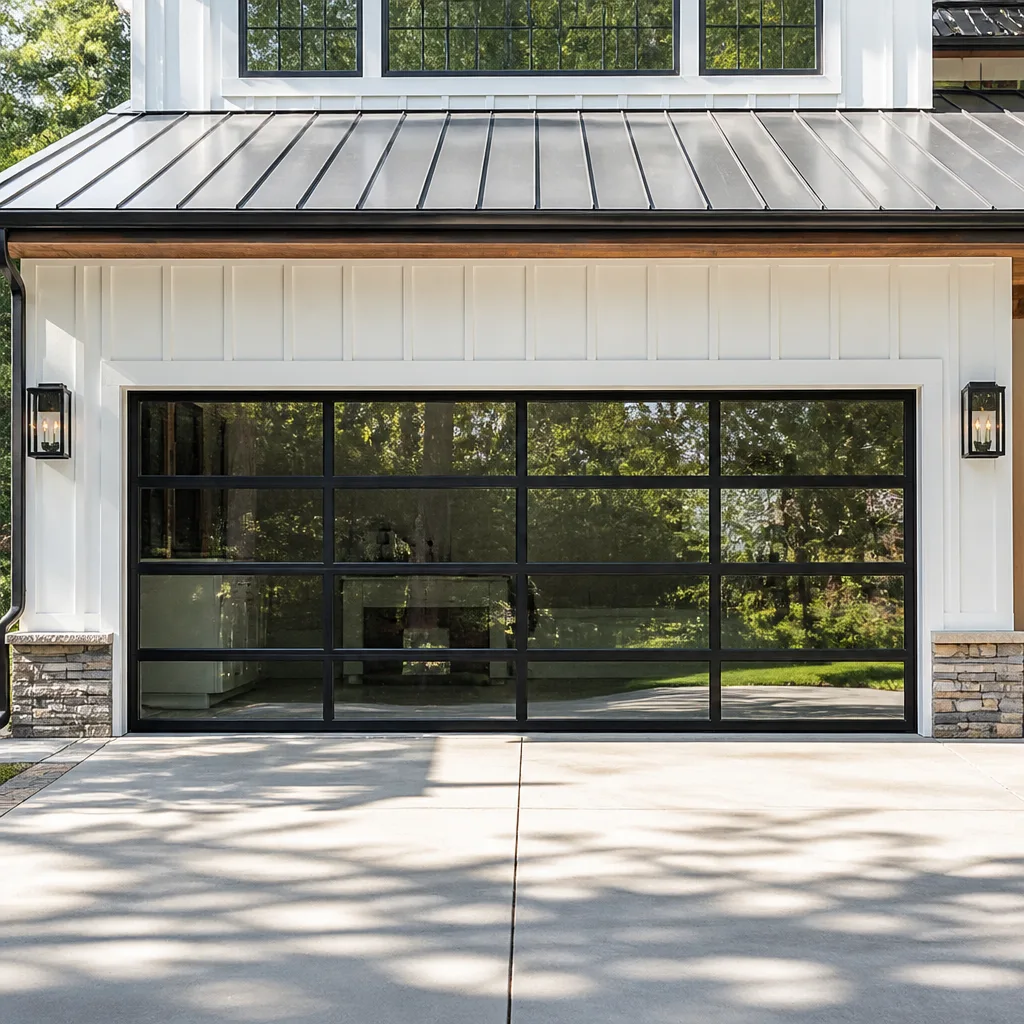 Full-view glass
 LiftMaster openers
 Chamberlain openers
Full 25-point door and opener safety check with every visit - springs, cables, rollers, tracks, and your LiftMaster or Chamberlain opener included
You get a price before we start. It does not change when the truck arrives.
Get your free estimateGarage Door Repair Maintenance Checklist for Gainesville Homeowners
Most garage door maintenance advice floating around the internet was written for a climate that freezes. That matters here. The parts that fail fastest on a Gainesville door are usually not the ones a northern checklist emphasizes, and the order you inspect things in changes what you find. Humidity, not cold, is the pressure point in this part of Florida, and it works on seals, cables and hardware for months before a homeowner notices anything wrong. This checklist is sequenced that way on purpose: moisture first, mechanics second. By the end you’ll know what to check yourself, what to leave alone, and when to pick up the phone.
Quick Answer
A solid garage door maintenance routine in Gainesville means checking the bottom seal, weatherstripping and cables for humidity damage before you touch anything mechanical, then running a door balance test, lubricating with a product that survives Florida heat, and scheduling a professional inspection once a year. Anything involving spring adjustment or cable tensioning belongs with a trained technician, no matter how handy you are.
Styles & brands we work with
- Raised-panel steel
- Carriage house
- Modern flush
- Full-view glass
- LiftMaster openers
- Chamberlain openers
Table of Contents
- Why Humidity Comes Before Mechanics on a Gainesville Door
- Step 1: Inspect the Bottom Seal and Weatherstripping
- Step 2: Check Cables and Hardware for Corrosion
- Step 3: Run the Door Balance Test
- Step 4: Lubricate with Products That Hold Up in Florida Heat
- Seasonal Timing: Before June 1 and After the Dry Season
- What’s DIY-Safe and What Requires a Specialist
- Opener and Smart-Home Checks
Why Humidity Comes Before Mechanics on a Gainesville Door
A garage door is a metal machine living in an unconditioned room in one of the more humid parts of the country. That reality reshapes the checklist. Springs in Gainesville tend to give out at higher rates in spring and fall, and the driver isn’t a cold snap. It’s the repeated swing between wet and dry air, which works the steel through more load cycles than a drier climate would produce over the same years. Metal fatigues faster when it’s asked to flex in humid air and then settles when the air dries out.
The same moisture attacks the softer parts of the system first. Rubber seals harden and shrink. Weatherstripping pulls away from the frame. Cables that protect the door’s safety develop surface rust, and rust is where a cable starts to fray. On top of that, Gainesville’s summer heat bakes the lubricant on the tracks, rollers and hinges, and grease that has broken down turns into a magnet for grit.
So the sequence matters. If you start with the springs, you’re inspecting the part that fails most dramatically, but not the part that fails first. Work from the outside in:
- Moisture-exposed parts: bottom seal, side and top weatherstripping, cable condition.
- Lubricated moving parts: rollers, hinges, tracks, the torsion bar area.
- Load-bearing parts: springs, cables under tension, brackets.
- Electronics: the opener, safety sensors, wall controls and smart-home connections.
That order gets you to the causes behind the symptoms. A door that slams or reverses is often reacting to a stiff seal or a bound roller before it ever gets to the spring.
Step 1: Inspect the Bottom Seal and Weatherstripping
The bottom seal is the first thing humidity gets to, and it’s the cheapest part on the whole door to replace. It runs along the bottom edge of the lowest panel and presses against the concrete when the door closes. Over a few Gainesville summers, the rubber dries out, cracks and flattens. Once it loses its spring, rain driving sideways under the door has an open invitation, and the slab inside your garage stays damp.
Here’s how to check it without tools:
- Close the door fully and look along the bottom edge in daylight. Any light visible under the door is a gap.
- Press the seal with your thumb at several points. It should feel supple and spring back. If it feels like hard plastic or crumbles, it’s finished.
- Look for tears where the seal meets the door’s aluminum retainer, especially at the corners.
- Run your hand along the side weatherstripping on the frame. Gaps at the top corners are common and let humid air sit against the door’s edge.
Side and top weatherstripping lives on the door frame, not the door, and it takes the same beating. When it pulls loose, the gap is small enough to ignore and big enough to let in driving rain during a Gainesville afternoon storm. Replacing a bottom seal and frame weatherstripping is genuinely DIY-friendly work on most doors, and it’s the single best return on a Saturday morning you’ll get from this list.
Step 2: Check Cables and Hardware for Corrosion
Lift cables run from the bottom corners of the door up to the drum above, and they are the parts most exposed to humid air. Look for rust along the length of each cable, and look closely at the ends where the cable loops around the bottom bracket. Fraying starts at the fittings. A cable with broken strands or a fuzzy appearance is not a “keep an eye on it” item; it’s a replacement.
While you’re at eye level, check the hinges and the roller stems. Surface rust on a hinge is common and not alarming on its own. What matters is whether the hinge still moves freely. A stiff hinge forces the door to work harder and puts extra load on the opener. Check the track for rust spots too, particularly if the door faces the weather.
A safety note before you go further: cables on a garage door are under extreme tension from the springs above them. Never loosen, adjust or cut a cable yourself, and never try to re-seat one that has come off a drum. A cable under load can release suddenly and cause serious injury. Inspect with your eyes and your hands at rest, note what you see, and hand the repair to a trained technician. The same goes for the torsion bar and springs. This is the point where a homeowner’s checklist stops and a technician’s begins.
Step 3: Run the Door Balance Test
This is the most useful thing a homeowner can do, and it takes about a minute. The balance test tells you whether the springs are still carrying the door’s weight or whether the opener is doing work it wasn’t built for. Do it with the opener disconnected.
- Close the door fully.
- Pull the red release handle hanging from the opener rail to disconnect the door from the drive. On most openers, this puts the door in manual mode.
- Lift the door with one hand to about waist height. It should open smoothly and feel manageable, not like dead weight.
- Let go at the halfway point. A properly balanced door stays put, or drifts only slightly.
- If the door drops on its own, the springs have lost tension. If it rises on its own, they’re over-tensioned. Either way, note it and call a professional.
- Reconnect the door by pulling the release handle back and running the opener once to re-engage, then test the safety reverse before you walk away.
Do this test a few times a year and write down what you find. Keep the notes with the door’s manual. A door that changes behavior between tests is telling you something is wearing, and a written record makes the conversation with a technician much shorter. For Gainesville homes where the door faces a hot exterior wall, run the test in the morning rather than the heat of the afternoon so you’re judging the door’s balance and not the metal’s expansion.
Step 4: Lubricate with Products That Hold Up in Florida Heat
Not every garage door lubricant belongs on a Florida door. The lightweight oils sold in small cans are fine in cooler climates, but Gainesville heat thins them out fast. A thin oil runs off the roller stems and hinges within weeks, leaving bare metal. The other common mistake is heavy grease, which stays put but collects grit and turns into an abrasive paste that wears the rollers and tracks faster than dry metal would.
What holds up here is a silicone-based or lithium-complex lubricant designed for high temperatures and humid conditions. It clings without trapping dirt. Apply it on the right parts, and only those parts:
- Roller stems and bearings: the metal shaft and bearing, not the roller’s rubber face.
- Hinges: one drop or a short spray at the pivot point of each hinge.
- Torsion bar and center bearing plate: a light coat, applied with a rag rather than sprayed.
- Track curves: a light wipe through the curved section, never the straight track.
Leave the straight track alone. The door’s rollers are meant to roll, not slide, and lubricant on a straight track encourages sliding. Also leave the bottom seal and weatherstripping dry; petroleum products break rubber down. Wipe the painted panels with a damp cloth and mild soap and skip anything petroleum-based, which can dull factory finishes. Twenty minutes twice a year is enough, once before summer and once after the wet season.
Seasonal Timing: Before June 1 and After the Dry Season
Gainesville has two useful maintenance windows, and they line up with the weather rather than the calendar on the wall. The first is before hurricane season opens on June 1. That’s when a door needs to be inspected and function-checked, because a garage door is one of the largest openings in a house and the system that holds it closed has to be working when you’re not home to watch it.
Before June 1 checklist:
- Bottom seal and frame weatherstripping intact, with no light visible under the closed door.
- All bolts on hinges, brackets and the track snug. The vibration of normal use loosens them.
- Cables inspected for rust and fraying, with a professional handling anything suspect.
- Opener safety reverse tested with a small object in the door’s path, per the opener manufacturer’s instructions.
- Manual release tested and working, so you can open the door by hand if the power goes out.
- Panels checked for loose fasteners and any damage that rain could find its way into.
The second window is after the wet season starts to wind down, when the air dries and you can judge the door’s condition without the humidity skewing what you notice. That’s the time for lubrication, a fresh balance test, and a look at anything the summer storms pushed out of place. If your door is older and uses Amarr, Wayne Dalton or Craftsman hardware, the parts you’ll be inspecting are common ones and replacement seals and rollers are easy to source, which is one more reason to catch wear early rather than after it cascades.
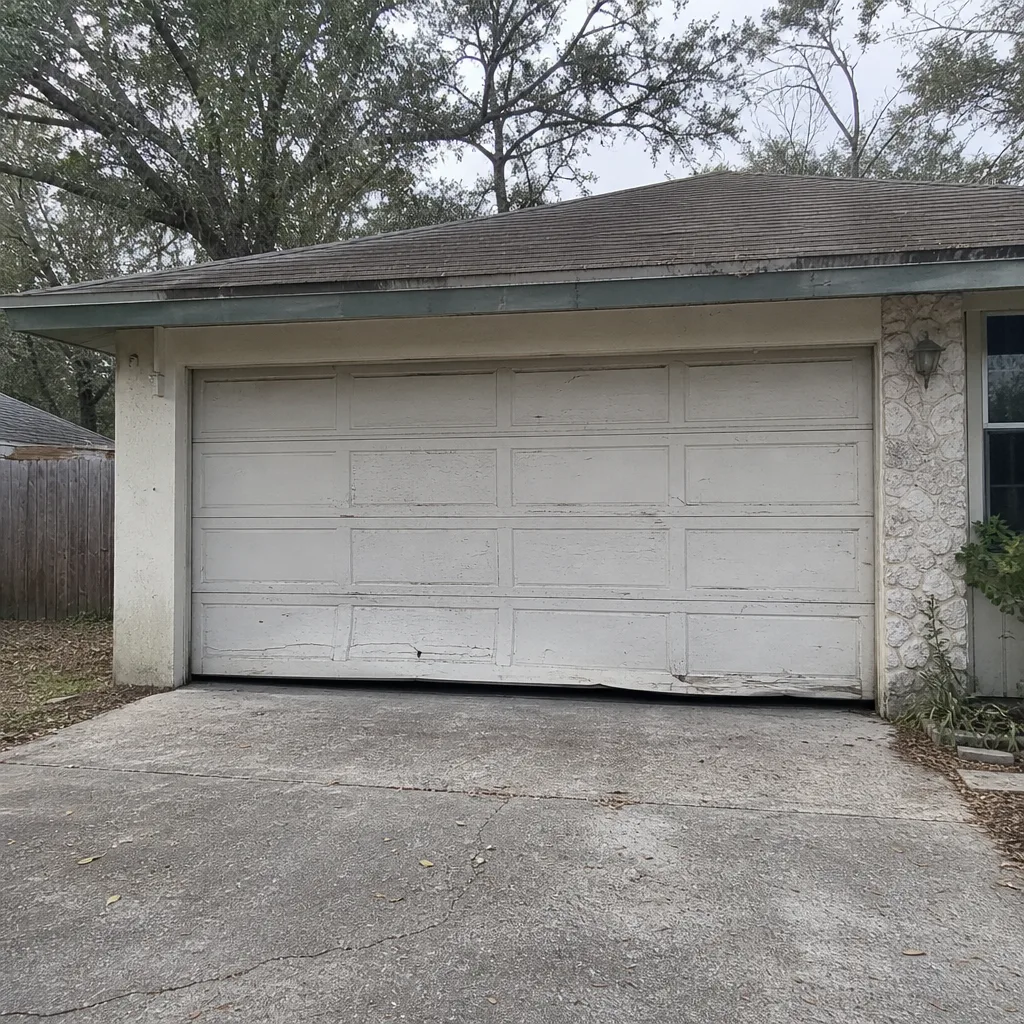
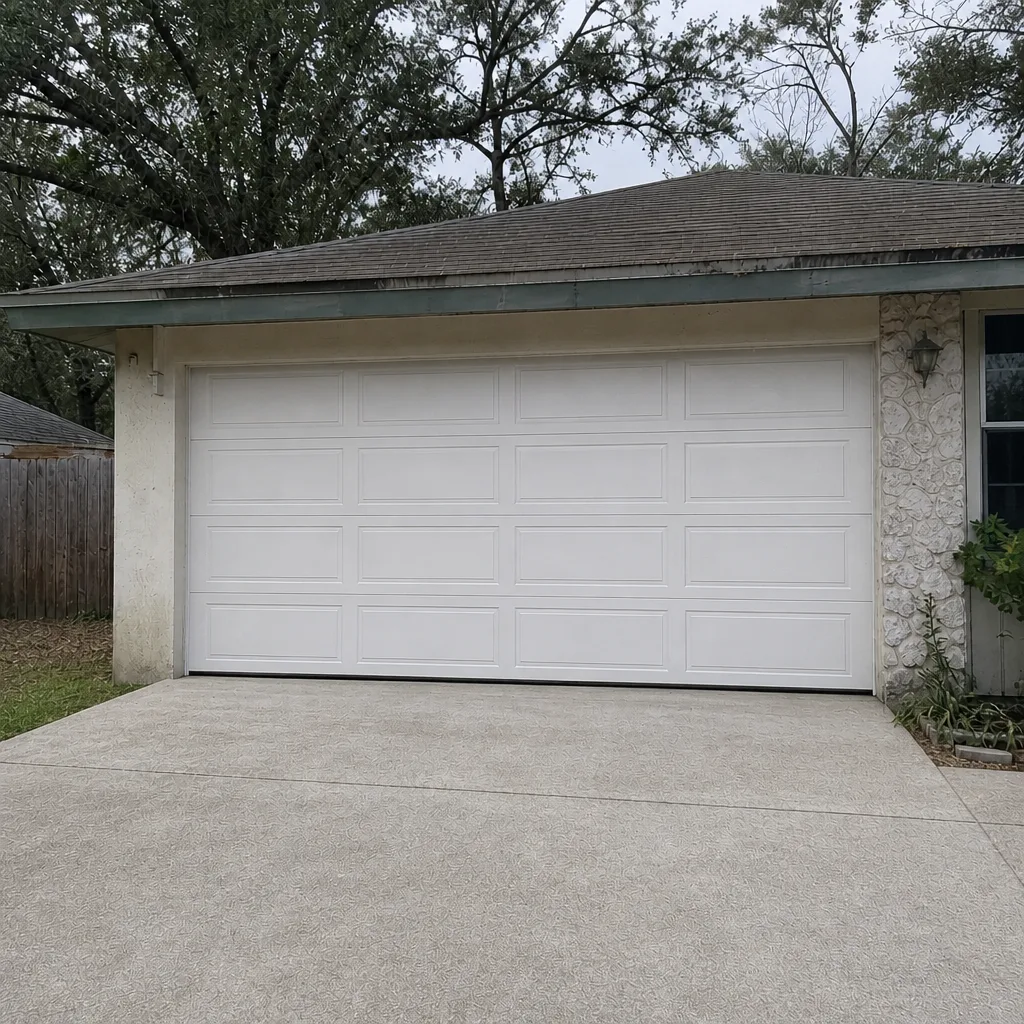
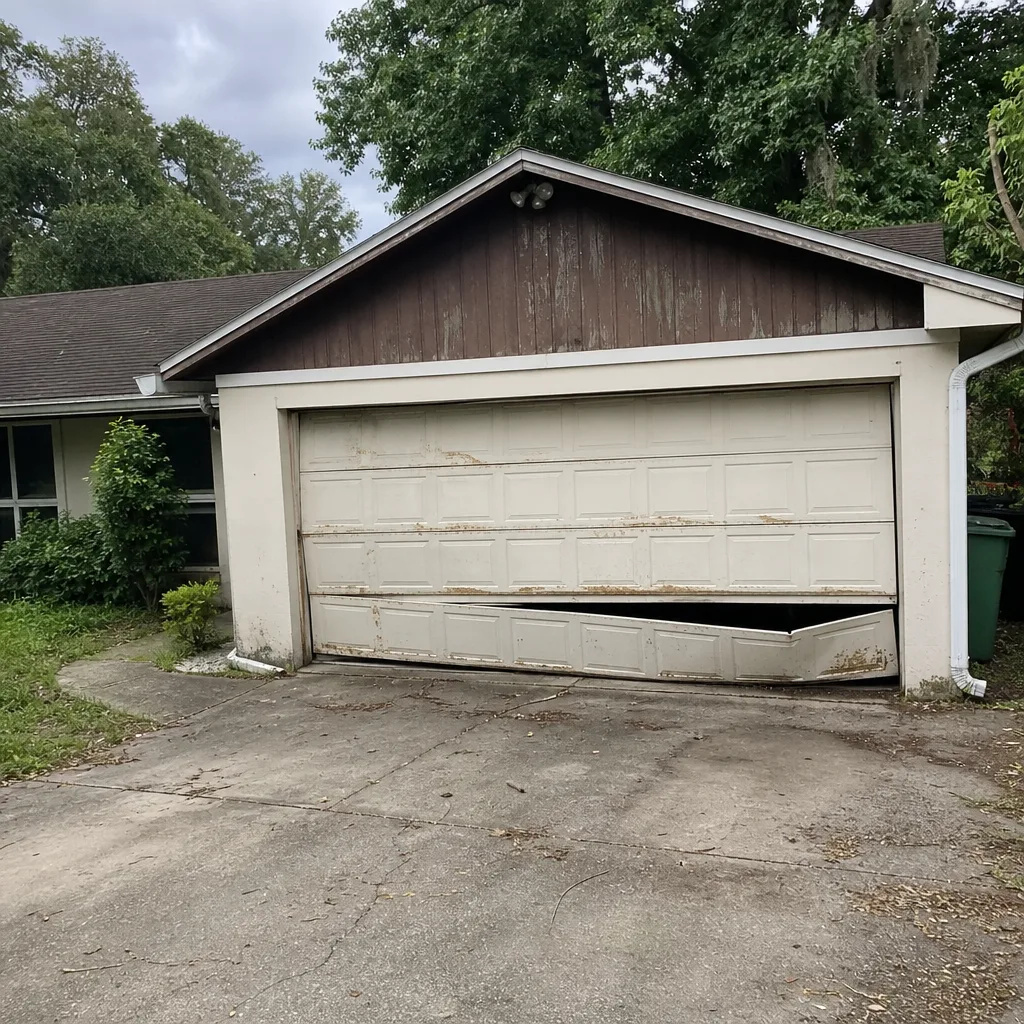
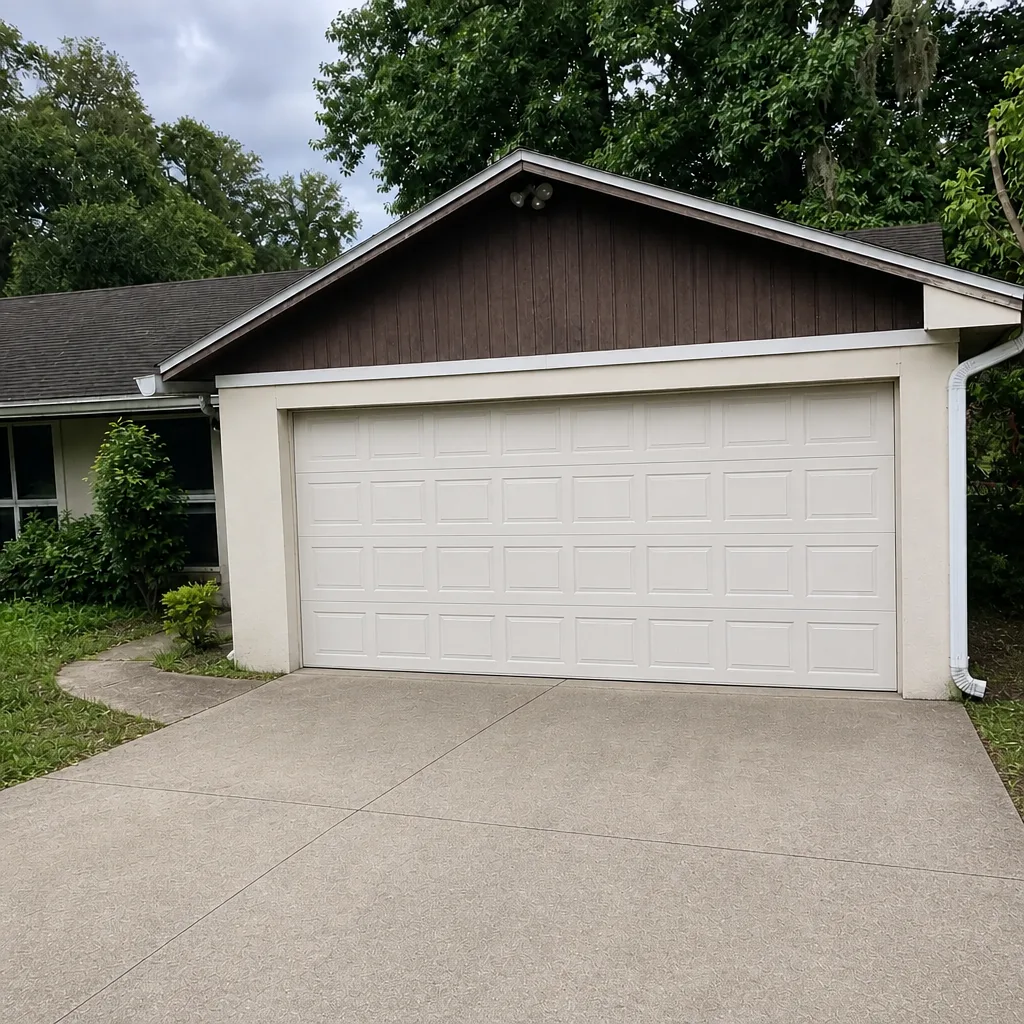
See the difference
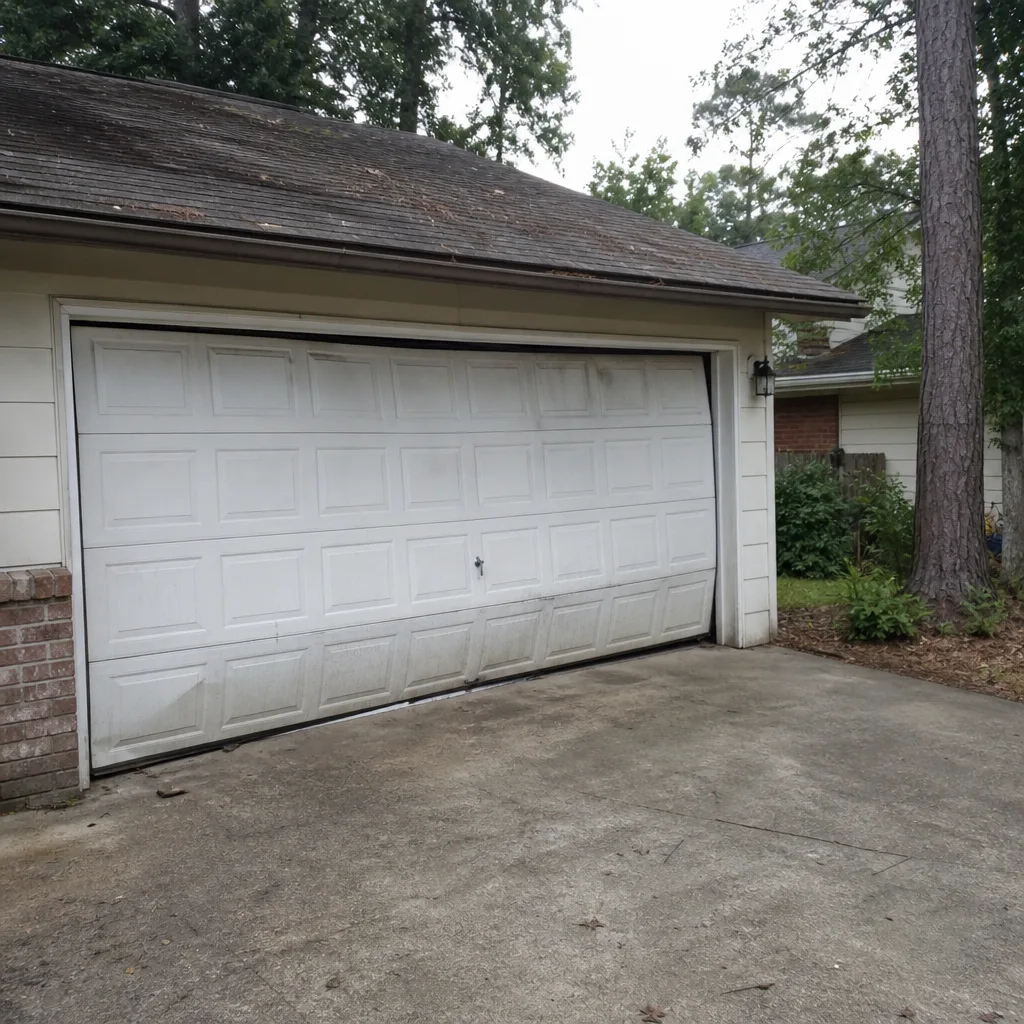 Before
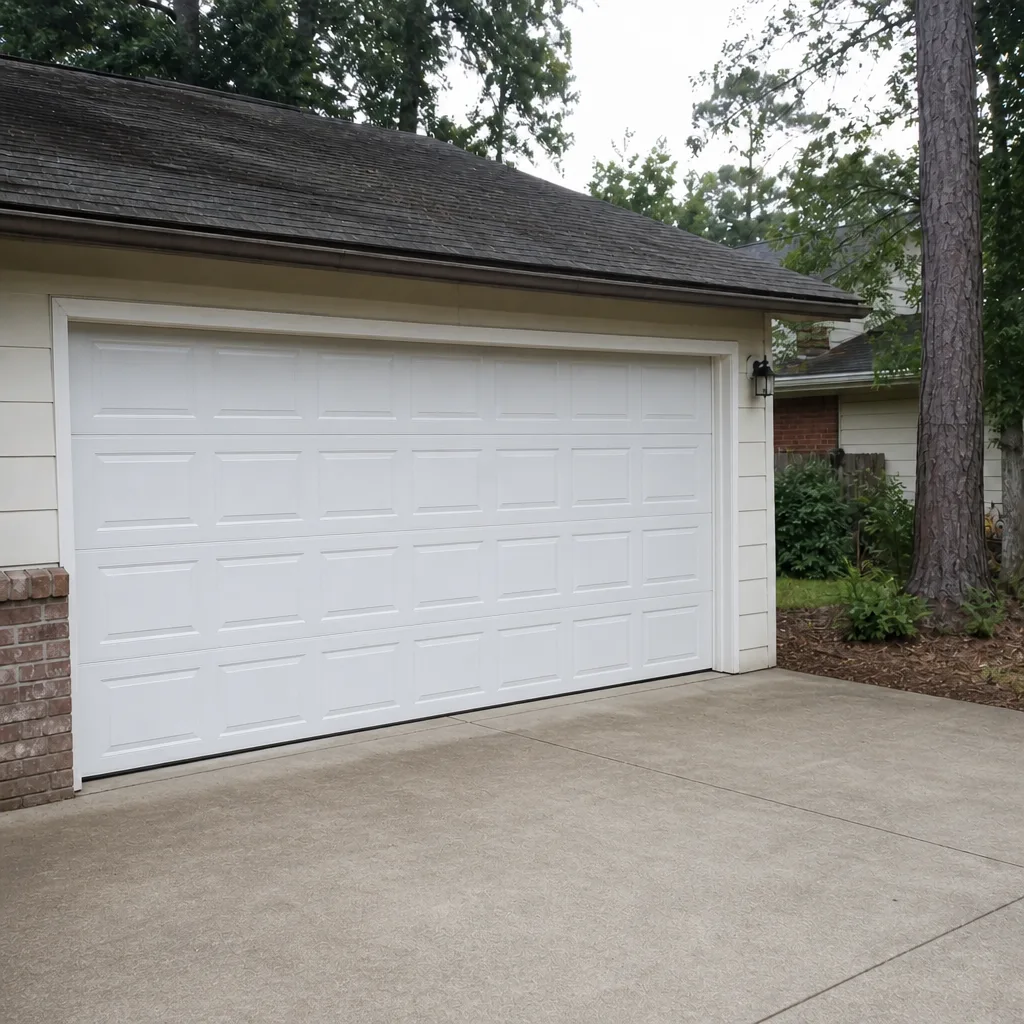 After
 Before
 After
 Before
 After
What’s DIY-Safe and What Requires a Specialist
Being honest about the split is the most valuable part of this checklist. Plenty of homeowners in Gainesville are capable, and plenty of the routine work really is theirs to do. The danger zone is narrow and specific, but it’s genuinely dangerous.
Safe for most homeowners:
- Wiping down painted panels and washing with mild soap and water.
- Lubricating hinges, roller stems and the torsion bar with a high-temperature product.
- Visual inspection of seals, weatherstripping, tracks and cables.
- Replacing a bottom seal on a standard retainer.
- Tightening accessible bolts on hinges and brackets, without removing or adjusting anything that carries spring or cable tension.
- Running the balance test and recording results.
Requires a trained technician:
- Spring adjustment or replacement. Torsion and extension springs store enormous force. Winding bars, proper technique and an understanding of the load are required, and a spring that lets go can cause severe injury.
- Cable tensioning or replacement. Same principle, same risk.
- Track realignment. A door that has jumped the track can fall, and straightening a bent track takes the right tools and knowledge of the door’s geometry.
- Bottom bracket work, which is where the cable attaches under load.
- Panel replacement where the door’s structure is affected.
Notice that the specialist list is short but the stakes on it are high. When a repair moves to spring or cable work, call us at (866) 389-5046 and we’ll give you a free estimate before anything starts.
Opener and Smart-Home Checks
The opener is its own ecosystem, separate from the door. Motors, gears, capacitors, circuit boards, safety sensors, travel limits and the smart features layered on top all belong to a system with its own failure points. A door that reverses for no reason is usually a sensor problem. A door that laboriously climbs is often a motor or capacitor that’s on its way out. A door that beeps or blinks in a pattern is running a diagnostic code the manufacturer designed for exactly this situation.
A few checks are safe to do yourself:
- Test the safety reverse. Place a small box in the door’s path and close the door. It should reverse on contact. If it doesn’t, stop using the opener and call for repair.
- Check the sensor eyes. Both sensors should have a solid light. A blinking light means the beam is blocked or misaligned. Clean the lenses and look for anything in the line between them.
- Clear the opener’s memory of unused remotes if you don’t know where every remote is.
- Test your app and rolling codes if your opener is connected to a smart-home system. If a remote stops working, reprogramming per the manufacturer’s guide is a homeowner’s job.
What you shouldn’t do is take the opener’s cover off to adjust the travel limits or the force settings by guesswork. Those settings protect the door and the people under it. If the door reverses unexpectedly, stops short or won’t close, that’s garage door opener repair territory. LiftMaster and Chamberlain units are common in Gainesville homes, and older Genie models are too, and a technician who works on them knows the diagnostic codes well enough to skip the trial and error.
When a Door Fails Anyway: What to Do
Maintenance reduces failures but can’t eliminate them. A spring breaks, a cable snaps, an opener quits mid-cycle. The right response in those moments is simple and it protects you. Close the door if it’s open and will stay closed, disconnect the opener with the release handle so the door is in manual mode, and don’t force anything. A door with a broken spring or slack cable can come down unpredictably.
Then call. If it’s a repair you need rather than a maintenance question, we handle garage door repair for the brand you already have. We answer 24/7. Fast dispatch from 7am to 7pm, Sunday through Friday. A call outside dispatch hours gets booked into the next opening. We’re closed on Saturday, so if a door fails on Saturday, call and we’ll book you for Sunday.
Gainesville homes sit in a humid climate where a failure tends to announce itself in stages rather than all at once. The door gets louder. The opener hesitates. The seal leaks a little. Each of those is a chance to act before it becomes an emergency, and that’s the real value of a checklist sequenced by local risk instead of convenience.
Common Mistakes to Avoid
- Greasing the straight track. It feels like a shortcut to a quieter door, but lubricant on the vertical track makes rollers slide instead of roll, which accelerates wear. Keep lubricant on the curve only.
- Using motor oil or cooking oil on the door. Both thin out quickly in Gainesville heat and attract grit. A high-temperature silicone or lithium-complex product is what holds.
- Skipping the balance test because the door “still opens.” An opener will haul a door with dead springs for a while. That effort goes somewhere, and it usually shows up later as a burned-out opener motor.
- Adjusting springs yourself. This is the mistake with the highest cost. The tools and technique matter, and the stored force doesn’t care how careful you are. Leave spring work to a technician.
- Ignoring the bottom seal. It’s the cheapest part to replace and the one most responsible for moisture getting into the garage. In this climate, a failing seal is a standing invitation for damp air and water.
- Inspecting once and forgetting. A single inspection is a snapshot. A door that failed the balance test last spring and passes it now may have had its springs replaced. Behavior between checks is the useful data.
- Assuming any handyman can sort it. Garage doors look simple from the outside. The parts that matter are load-bearing, and a generalist who guesses at spring tension or cable routing can leave a door less safe than they found it.
When to Call a Professional
Call when the balance test fails, when you see rust or fraying on a cable, when a spring is visibly broken or the door needs lifting by hand, or when the door has jumped its track. Call if the opener reverses without an obstruction, blinks a diagnostic code or stops partway. Call after any impact with a vehicle, even if the door looks fine, because the hardware may have taken strain you can’t see. Call if the bottom seal needs replacing and you’d rather not do it yourself. Holloway Garage Door Repair offers free estimates in Gainesville, and we’ll tell you honestly if the item on your list should wait. Call (866) 389-5046.
Frequently Asked Questions
Once a year for a professional inspection, plus a homeowner check twice a year in this climate. Spring and fall are the natural checkpoints, and pre-June 1 is the one to protect. Humidity works on the door year-round, so the annual visit catches what a visual check can’t: cable condition under the drum, spring tension, and opener force settings.
Yes, on the correct parts. Lubricate roller stems and bearings, hinge pivots, the torsion bar and the curved section of track with a high-temperature silicone or lithium-complex product. Leave the straight track, the bottom seal and the weatherstripping dry. In Florida heat, thin oils run off fast and heavy grease traps grit, so the product choice matters as much as the schedule.
It’s a one-person check of whether your springs still carry the door’s weight, and it’s safe if you follow the steps. Disconnect the opener with the release handle, lift the door to about waist height, and let go at halfway. A balanced door stays or drifts slightly. One that drops or rises on its own needs a professional. Reconnect and test the safety reverse afterward.
Because the humidity swings work the metal harder than steady conditions would. Springs in Gainesville cycle through wet air and dry air repeatedly, and each cycle flexes the steel. Over years, that adds up to fatigue at a faster pace than a drier climate would produce. It’s a moisture story, not a cold-weather story.
Check that the bottom seal and frame weatherstripping are intact, all accessible bolts are snug, cables show no rust or fraying, and the opener’s safety reverse works. Test the manual release so you can open the door by hand if power is out. Hurricane season opens June 1, so the window for this inspection is late spring, before the storms start lining up.
It’s urgent, not a wait-and-see item. Don’t run the opener with a broken spring, because the motor will strain against a door it can’t safely lift. Close the door if it will stay closed, put the opener in manual mode, and call (866) 389-5046. We answer 24/7, and dispatch runs 7am to 7pm, Sunday through Friday.
The Bottom Line
The order of this checklist is the point. In Gainesville, humidity attacks the seals, cables and hardware before it touches the springs people worry about, and the balance test tells you where you stand without tools. Do the moisture checks first, lubricate with a heat-tolerant product twice a year, and respect the short list of jobs that require a technician: springs, cables, tracks and force settings. Everything else is yours to handle, and catching wear early keeps a repair from becoming a replacement. When in doubt, call us and we’ll look at it with you.
Whether it’s a stuck spring, a failing opener or a full new door, we work on the brand you already have, including Amarr, Wayne Dalton, Craftsman and Raynor hardware. Holloway Garage Door Repair is a garage-door specialist, and garage doors are all we do. Reach us at (866) 389-5046 for a free estimate, and see our Gainesville page for more about how we work in this city.
Written by the team at Holloway Garage Door Repair, serving Gainesville since 2017.